Why Marvel Peaked at Civil War and Went Downhill After That
Why Marvel Peaked at Civil War and Went Downhill After That
Marvel Cinematic Universe (MCU) fans often debate which movie represents the studio at its creative peak. While Infinity War and Endgame were blockbuster spectacles, the truth is that MCU peaked with Captain America: Civil War. Here’s why, and why things went downhill after that.
---
1. Civil War: The Peak of Grounded Action and Storytelling
Civil War achieved a near-perfect balance between superhero spectacle and human relatability.
🔹 Grounded, Strategic Choreography
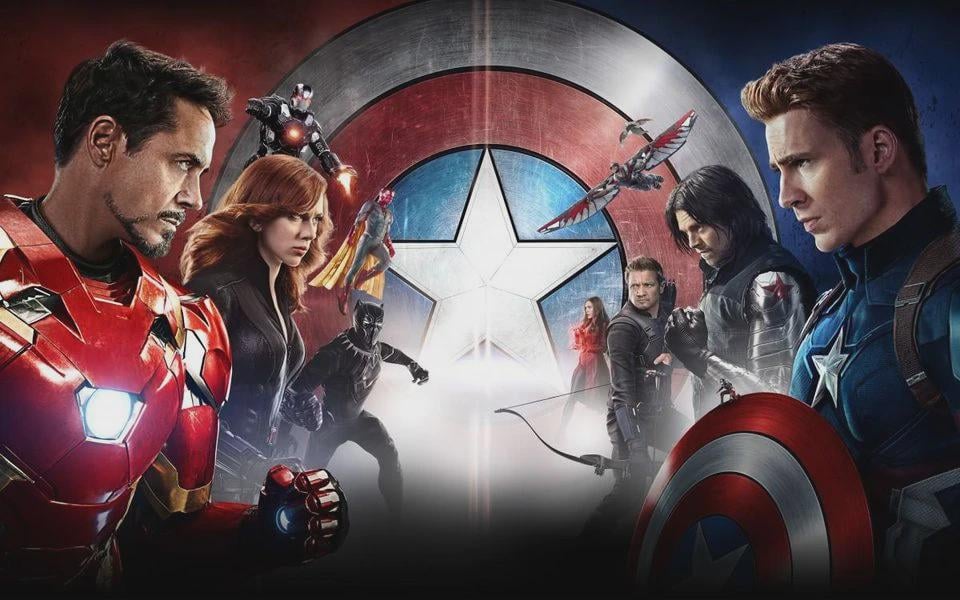
Even with twelve superheroes on screen, every fight was tactical, mechanical, and physically grounded. Iron Man, arguably the most powerful hero on Earth, had to fight strategically, not just spam beams. Overpowered characters like Vision and Wanda were intentionally limited during the big fight scenes to avoid turning the battle into chaos.
This was brilliant writing: every hero had a meaningful role without overshadowing others. Even characters that seemed underused, like Vision, were intentionally restricted for narrative balance. Their presence wasn’t for spectacle—it kept the fight fair and engaging.
🔹 Bright, Clear Lighting
Unlike later MCU movies, Civil War’s fights were filmed in bright daylight with wide angles, allowing audiences to clearly see the choreography. There was no hiding behind darkness or smoke. Every punch, shield throw, and maneuver could be appreciated in full.
🔹 Power Levels Were Controlled
The Russo brothers understood that leaving every character at full power would break the story. They mechanically limited stronger heroes during fights to maintain stakes. No one could end the battle instantly, and every hero had a fair share of screen importance.
Result: Civil War felt real, tense, and carefully planned—despite the chaos of a superhero clash.
---
2. Infinity War & Endgame: Spectacular but Shallow
While Infinity War and Endgame delivered emotional payoff and closure for the Infinity Saga, they fell short in action execution and grounded storytelling.
🔹 Boom-Boom CGI Overload
The fights became heavily CGI-dependent, often shrouded in darkness, fog, or chaos to hide weak effects. Unlike Civil War, the choreography was minimal—characters flailing and energy beams exploding replaced precise, tactical combat.
🔹 Too Many Superheroes
With dozens of heroes, it became impossible for every character to feel impactful. The filmmakers tried to include everyone, but with powers so extreme, fights risked feeling meaningless. When heroes can choke each other from 50 meters away or solve battles mentally, physical action loses its tension.
🔹 Emotional, Not Physical Stakes
Infinity War and Endgame relied heavily on emotional connections and large-scale stakes. While audiences cried and celebrated, the action sequences themselves lacked the grounded intensity that made Civil War compelling. Even Ant-Man’s “inside the quantum realm” sequences felt boring because they were disconnected from human struggles.
---
3. The Problem with Overpowered Heroes
One core problem in post-Civil War MCU is that superpower supremacy kills tension:
Heroes can easily solve problems with sheer force.
Villains become non-threatening because fights end instantly.
The audience can no longer relate to the hero’s struggle.
Compare:
Captain America: Hand-to-hand combat, tactical shield use, real stakes, physical exhaustion.
Cosmic heroes (Thanos, Wanda, Vision): Limitless powers, meaning fights are resolved in a flash.
The result? Action becomes a light-show, not a struggle to admire or feel invested in.
---
4. Dark Settings Hide Weaknesses
Hollywood often uses nighttime or smoky battles to cover sloppy CGI or rushed editing. This is why Endgame’s final fight feels chaotic and visually confusing, unlike Civil War’s clear, bright, and tactical battles.
---
5. Why Civil War’s Design Was Genius
Controlled power levels prevented chaos.
Every hero had a meaningful role.
Fights were visually clear and mechanically precise.
Relatable stakes remained high—heroes still had human limitations.
Emotional stakes were built into character interactions, not just the spectacle.
In short, Civil War combined spectacle with grounded human storytelling, something later movies struggled to maintain.
---
6. Conclusion: Why Marvel Went Downhill After Civil War
After Civil War, the MCU leaned into:
Massive CGI battles
Unlimited superhero powers
Complex multiverse mechanics
Emotional stakes over tactical, physical action
While Infinity War and Endgame succeeded emotionally, they lost the grounded, strategic, human-level storytelling that made Civil War peak-level.
Essentially, the studio sacrificed clarity, choreography, and relatability for larger spectacle, and the result was less satisfying action and weaker audience connection in pure superhero mechanics.
---
TL;DR
Civil War was the pinnacle of balanced MCU filmmaking: tactical fights, controlled powers, relatable stakes, and meaningful hero contributions. Post-Civil War, the MCU prioritized spectacle, emotional closure, and multiverse chaos, often at the cost of clarity, choreography, and grounded storytelling.
Commentaires
Because I said so.
Endgame was, for a lack of a better word, game-breaking. It would've been hard to follow up from the get go.
I think the MCU was struggling during Phases 4-5 because the following factors.
Lack of the overarching story that Infinity Saga had: The movies that were supposed to be connected to the Mutliverse Saga didn't feel like they were leading to anything interesting. It didn't help that the narrative was split between TV shows and movies, which made everything more overwhelming to fans.
Constant meddling from the studio execs: Many of the movies and TV shows kept having to be reshot and rewritten on the fly because producers didn't have confidence in the directors'/writers' visions and changing things up. It also ate into the budget, which is why the VFX don't look as polished.
Kang didn't seem like a threat: I'll be real and say that I really did like Kang and I liked Quantumania as a movie. With that said, I can understand why fans and moviegoers didn't like Kang all that much. He's supposed to be one of the Avengers' most powerful and troublesome enemies, yet his build up felt clumsy at best and when he did show up on screen, well... he lost to a single Avenger, and that Avenger was Ant-Man. Keep in mind that this was someone who gave even Thor and Hulk a run for their money and having him lose to Ant-Man didn't exactly give fans confidence in him as a villain. Not only that, but we didn't reallyv"see" Kang. We hear about is conquests, but we never actually see them. This should've been the type of build up he needed: showing him conquering all the timelines.
Type your own thoughts and maybe it's worth arguing over, but you're wrong anyway. But I'm not gonna reply to AI
If you're asking an open-ended question, try to add your own personal answer and the reasoning.