3 reasons why Blade is so important and why it’s also important that Wesley Snipes reprises his role.
Blade quietly changed the game. Before Blade, superhero movies were rare, risky, and often campy. Studios weren’t fighting for comic book rights. They saw them as niche or unproven. After Blade pulled in $131M on a $45M budget, everything shifted. Suddenly, Fox invested in X-Men (2000), Sony bought Spider-Man (2002), and Marvel began licensing characters like Daredevil, Hulk, and Ghost Rider. The superhero genre went from gamble to goldmine and Blade was the PROOF OF CONCEPT that made it happen.
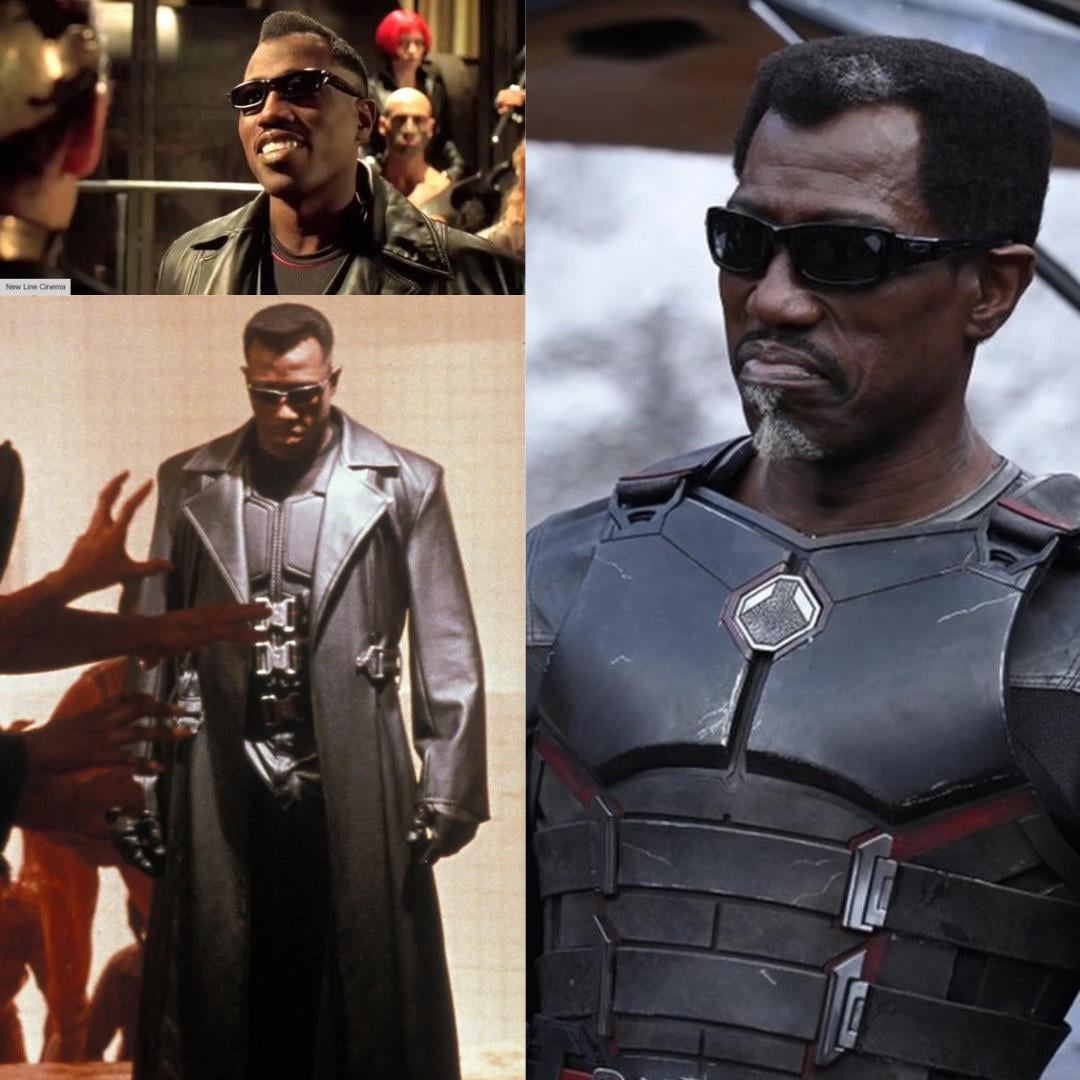
Wesley Snipes IS Blade and Blade IS Wesley Snipes. In the first movie, Whistler says Blade ages like a human — meaning he only has one lifetime to rid the world of as many vampires as he can. That makes Snipes, now in his 60s, even more perfect for a grizzled, world-weary vampire hunter. That weight, that urgency, makes an older Blade even more compelling. Let him finish what he started.
And let’s not forget: the first superhero landing on film? Wesley Snipes. Blade (1998). Long before it became a Marvel cliché, he made it iconic. Respect the originator.
Blade deserves way more flowers than it gets.
Commentaires
Its not just consent, its compensation.
So they have to pay to use AI actors.
Thats very different from AI replacing actors. If you have to pay to use a recreation, why not just use the real one.
When Blade came out in 1998, it was during the vampire trend of the 90s. Buffy the Vampire Slayer, Interview with the Vampire, and John Carpenter's Vampires were all around this time. Blade was seen as a vampire movie, not a comic book or superhero movie. There was little mention of Blade's comic origin during the marketing of the movie, The ties to Marvel were downplayed with only Blade and Deacon Frost were the only characters from the comics, and they had been changed significantly for the movie. The creators of Blade were not mentioned in the credits of the movie and it lacked even a Stan Lee cameo. There were no comic book tie ins to the movie and no Blade monthly series at the time of the release to capitalize on the movie. Most viewers at the time were unaware that Blade was from a comic.
Marvel was selling the movie rights to their characters years before Blade came out. Most of the development was due to the success of Tim Burton's Batman in 1989, where studios were trying to figure out the next big hit. The X-Men rights had been at Fox since at least 1994 and was boosted by the animated series. The various rights for Spider-Man were sold so much that it took years to untangle the legal mess before a movie could be made.
Although I wouldn't hold not having a Stan Lee cameo against it. That didn't really become A Thing until the 2000s.
Let Wesley Snipes’ Blade go.
Let Tobey Maguire’s Spiderman go.
Let Hugh Jackman’s Wolverine go.
Hell, let the MCU cast and their characters go once their stories are done.
These are actors playing fictional characters. They are not and absolutely should not be tied to the roles so closely. It’s been over 25 years. Stop putting the character at a detriment because you are so emotionally attached to an actor that you are willing to diminish the quality of the film for their sake. Having a good movie or two doesn’t mean we need to treat that whole adaptation like a religious deity. Move the fuck on.
We need to embrace this and accept new adaptations. This is the one thing the Marvel community has always been better at than DC, its ability to see different interpretations and representations while not maintaining a toxic relationship to one of them and reducing all the others regardless of quality (Snyder vs Gunn).
Chad wasn't T'Challa and vice versa. He was more than just a character and the character has existed before him and will continue to exist. But because people still haven't let the connection go, we have fewer appearances of the character.
Wesley is getting up there and while seeing him again was nice, we need to move on.
Imagine if Superman ended after Jerry and Joe were no longer working on the book. He would've never become as iconic as he is today.
Or imagine if Cap was relegated to his one life action appearance in a film, we'd never have the MCU version.
Edit: added clarification
The thing that had made superhero movies into a gamble was Batman and Robin, which came out in 1997, so it was a pretty short turnaround.
Also, $131 million gross on a $45 million budget is definitely a respectable return, but it's hardly a gold mine.
And, as others have pointed out, Blade was a comic book movie on a technicality. It was really just a vampire action movie that happened to be based on a comic, but there's nothing particularly comic or superheroey about it. It's a step away from calling Road to Perdition a comic book movie.
So both Wesley and Mahershala could play the character in Secret Wars, which would act as a passing of the baton.
It also doesn't make sense to tie characters meant to go on for decades to an actor. I'm tired of this cult of personality thing because the character comes after the actor and most times is just empty fanservice rather than good casting.
Live action already has a disadvantage for superhero stories against animation and comics, since they take a long time and actors age. You shouldn't make the problem worse by hanging on to an old actor.
Apart from that, if you have a 60 year old blade, you can tell very interesting stories about aging superheroes, but you miss out in a lot of other stories since the roles are so physical.
That's considering Snipes would like to return to a longer project, which I doubt.
If you want to kill Blade's possible relevancy, Wesley Snipes is a great cast.